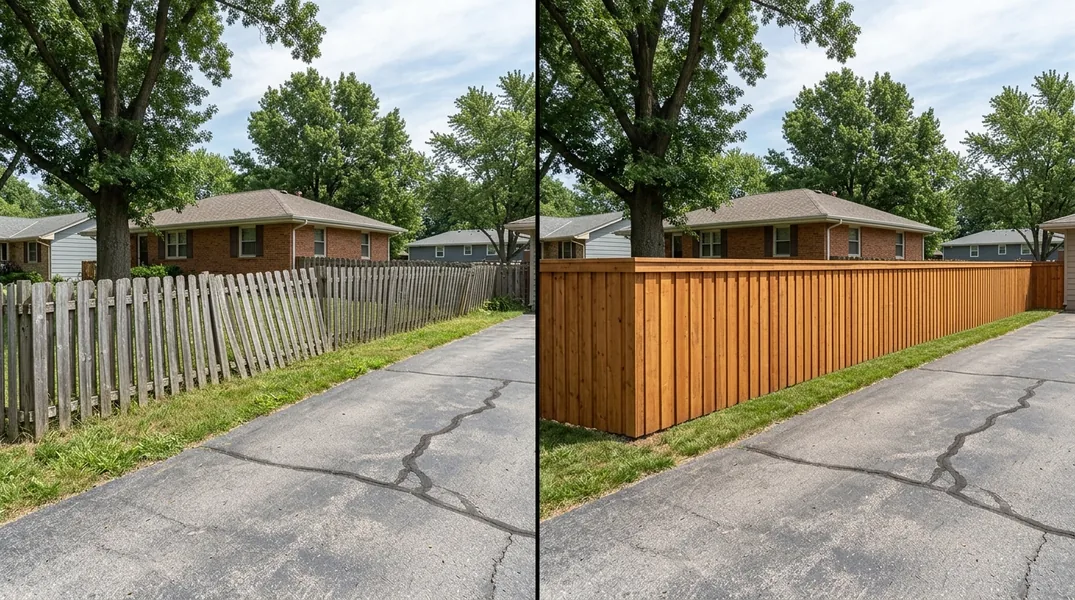
Understanding Omaha's Climate and Fence Performance
Omaha experiences a humid continental climate with hot summers, cold winters, and significant seasonal variation. This weather pattern directly affects how wood and vinyl fencing perform over time. Homeowners in Omaha need to understand that both materials respond differently to temperature swings, moisture, and UV exposure, which are all common challenges in the Midwest.
Wood fences absorb and release moisture with the changing seasons, causing expansion and contraction. In winter, when temperatures drop below freezing, wood can become brittle and crack. During humid summer months, wood is susceptible to rot and fungal growth if not properly sealed and maintained. Vinyl, on the other hand, expands and contracts at a different rate and doesn't absorb water, but extreme cold can make it more rigid and potentially prone to cracking under stress. Understanding these climate-specific challenges helps homeowners make an informed decision about which material will serve them best for years to come.
The Case for Wood and Privacy Fence Installation
Wood & Privacy Fence Installation remains a popular choice for homeowners who value aesthetics and natural appeal. Wood offers a warm, classic look that complements virtually any home style, from traditional to contemporary. Many homeowners appreciate the ability to stain or paint wood fences in virtually any color, allowing for complete customization that matches their landscape design and personal preferences. The natural grain and texture of wood create visual interest that vinyl simply cannot replicate.
Beyond appearance, wood fences have been a trusted choice for generations. They provide solid privacy, excellent sound dampening, and a sense of permanence that many families value. Wood is also biodegradable and environmentally friendly compared to synthetic alternatives. However, the trade-off is clear: wood requires regular maintenance including annual staining or sealing, periodic repairs, and vigilant inspection for signs of rot or pest damage. For homeowners willing to invest time and effort into upkeep, a well-maintained wood fence can last 15 to 20 years or more.
Vinyl and PVC Fence Installation: The Low Maintenance Alternative
Vinyl & PVC Fence Installation has gained significant traction over the past two decades as homeowners seek the best low maintenance fence option. Vinyl doesn't require staining, sealing, painting, or annual treatments. A simple annual wash with a garden hose removes dirt and debris, and that's essentially all the maintenance required. For busy homeowners or those who prefer to spend their weekends enjoying their yard rather than maintaining it, vinyl is an attractive solution.
Vinyl fencing is also resistant to rot, insects, and fungal growth, which are common problems in humid climates like Omaha's. It won't splinter, warp, or develop the structural issues that plague wood over time. Modern vinyl formulations are UV-resistant, meaning they resist fading and maintain their appearance for decades. The downside is that vinyl has less visual warmth than natural wood and offers fewer customization options. Additionally, vinyl can become brittle in extreme cold and may show minor cracks if subjected to significant impact. While vinyl typically costs more upfront, many homeowners find the reduced maintenance justifies the initial investment.
Vinyl vs Wood Fence Cost: Comparing Initial Investment and Long-Term Value
When comparing vinyl vs wood fence materials, the cost conversation is nuanced. Initial installation pricing for vinyl typically runs 20 to 40 percent higher than wood, depending on the specific materials and design. However, this upfront cost difference narrows considerably when you factor in long-term maintenance expenses. Wood requires regular staining or sealing every two to three years, professional repairs for damaged sections, and potential replacement of compromised posts or boards. These recurring costs add up significantly over a 20-year period.
Vinyl's minimal maintenance means lower ongoing expenses, but the material itself is less forgiving if damage occurs. A cracked vinyl panel typically requires full replacement rather than simple repair, which can be costly. Wood, conversely, allows for targeted repairs of individual boards or sections. For a true cost comparison, consider your time investment as well. If you value your free time highly, vinyl's low maintenance appeal may outweigh its higher initial cost. If you enjoy yard work and prefer to keep expenses low upfront, wood might align better with your budget and lifestyle. Getting a free estimate from Omaha Fence Company can help you understand the exact pricing for your specific project and property.
Durability and Longevity in Midwest Conditions
Durability is where climate-specific considerations become critical for homeowners in the Omaha area. Wood fences in humid continental climates face constant challenges from moisture fluctuation, freeze-thaw cycles, and pest pressure. Without meticulous maintenance, wood typically lasts 10 to 15 years before significant deterioration occurs. The freeze-thaw cycle is particularly damaging because water penetrates the wood, freezes, expands, and causes cracking. Over multiple winters, this process weakens the structural integrity of posts and boards.
Vinyl fences, when properly installed, can last 20 to 30 years or longer with minimal degradation. The material's resistance to moisture and biological growth means it doesn't suffer from the same decay processes that affect wood. However, vinyl's brittleness in extreme cold can be a concern if your fence experiences heavy snow loads or impacts from winter weather. Both materials can serve you well in Omaha's climate, but they require different approaches to achieve maximum lifespan. Wood demands consistent preventive maintenance, while vinyl demands careful installation and protection from extreme physical stress.
Making Your Decision: Which Material Is Right for Your Omaha Home
Choosing between wood and vinyl ultimately depends on your priorities, budget, and lifestyle. If you value natural beauty, enjoy maintenance tasks, and want lower initial costs, wood is an excellent choice. If you prioritize convenience, prefer minimal upkeep, and are willing to invest more upfront for long-term peace of mind, vinyl is the better option. Consider also your home's architectural style, your neighborhood's aesthetic standards, and how long you plan to stay in your home. A fence is a significant investment that will be part of your property's appearance for years to come.
The team at Omaha Fence Company understands the unique demands of fencing in the Midwest and can help you evaluate both options based on your specific situation. Whether you're leaning toward Wood & Privacy Fence Installation or Vinyl & PVC Fence Installation, our experienced team has installed hundreds of fences that stand up to Omaha's demanding climate. We can walk you through the pros and cons of each material, discuss your specific needs, and provide honest guidance about which choice makes sense for your property. Call us at (531) 541-5896 or visit our website to request a free estimate today. Let's find the perfect fence solution for your home.
Looking for a professional tree service in Omaha? Omaha Fence Company responds fast for all your fence needs.
Get a Free Quote