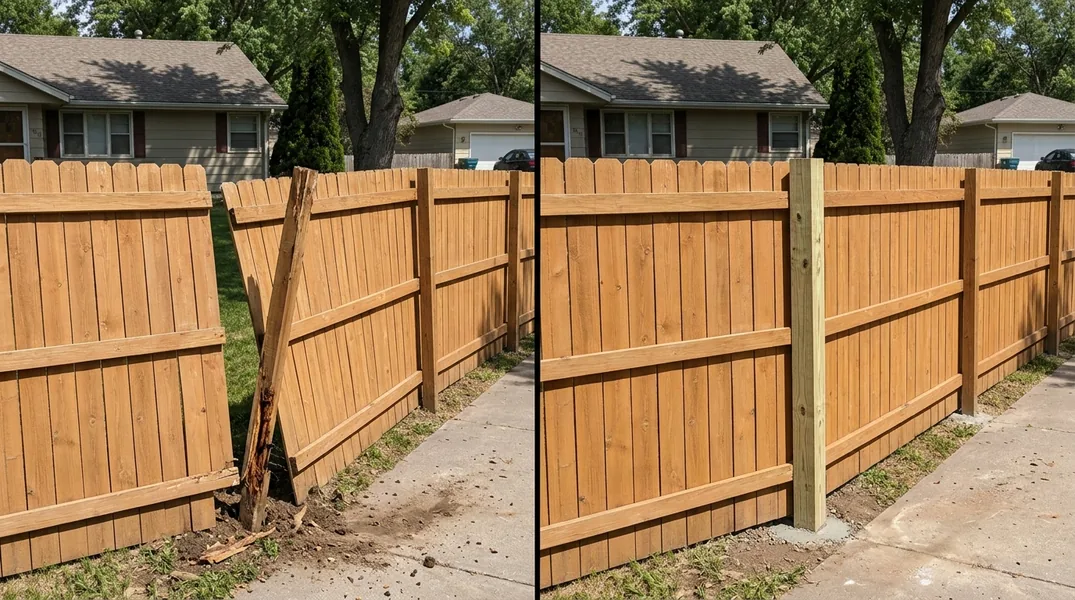
Why Omaha Fences Lean: Understanding the Climate and Soil Problem
If you've noticed your fence leaning, tilting, or gradually shifting out of plumb, you're not alone. Homeowners throughout Omaha deal with this frustrating issue every year, and the culprits are surprisingly predictable: Nebraska's brutal winter freeze-thaw cycles combined with the region's dense clay soil. These two factors work together to undermine fence posts and destabilize even well-built installations.
The freeze-thaw cycle is relentless in Omaha. Water penetrates the soil around your fence posts, freezes solid during winter, expands, and then thaws in spring. This constant expansion and contraction creates movement in the soil, gradually lifting posts upward and sideways. Over several seasons, this heaving effect can shift a post inches out of its original position. Add Omaha's heavy clay soil into the equation, and you've got a recipe for serious structural problems. Clay holds moisture far longer than sandy or loamy soil, which means more water around your posts and more freeze-thaw damage year after year.
How Clay Soil Accelerates Fence Post Damage
Clay soil in the Omaha area is dense, compacted, and notorious for retaining water. When you dig a post hole and set a fence post in clay, water naturally collects around the base. During winter, that water freezes and expands, creating pressure that pushes the post upward and outward. In spring, as the ice melts, the post settles back down but rarely returns to its original position. Repeat this cycle for five to ten years, and your once-straight fence becomes visibly crooked.
Beyond frost heave, clay soil also accelerates wood rot at the post base. When moisture remains in contact with wood for extended periods, decay organisms thrive. Even pressure-treated fence posts, which resist rot better than untreated wood, can succumb to rot in persistently wet clay conditions. The combination of heaving and rot weakens the post's structural integrity, causing it to lean, crack, or eventually fail entirely. This is why Wood & Privacy Fence Installation in Omaha requires special attention to post depth, drainage, and material selection.
Recognizing Signs of Fence Post Failure and Leaning
A leaning fence doesn't happen overnight. Most homeowners notice the problem gradually, starting with a slight tilt that seems harmless but worsens each season. Common warning signs include visible daylight between the fence and the ground, posts that appear to lean away from the property line, horizontal boards that no longer sit level, or gaps opening between boards that were once tight. If you press on a fence post with moderate force and it moves or flexes, that's a red flag indicating weakened structural support.
Another telltale sign is rotted wood at the base of the post. If you see discolored, soft, or crumbling wood near ground level, rot has already compromised the post's load-bearing capacity. Some homeowners also notice that gates no longer close properly or that fence sections feel unstable when touched. These symptoms indicate that fence post repair or replacement is needed soon. Ignoring these warning signs allows the problem to spread to adjacent posts and sections, turning a manageable repair into a costly full-fence replacement.
Leaning Fence Repair Options: When to Repair vs. Replace
When you discover a leaning fence, you have several options, each with different costs and longevity. For minor leaning caused by frost heave alone (without significant rot), a professional contractor can sometimes straighten the post by carefully excavating around it, resetting it to the correct depth and angle, and backfilling with concrete. This approach works best when the post itself is still structurally sound. However, if the post has rotted, cracked, or sustained other damage, repair is rarely a permanent solution.
Fence post replacement is the more reliable long-term fix, especially in Omaha's climate. A professional contractor will remove the damaged post, dig a new hole to the proper depth (typically 30 to 40 inches for residential fences), install a new post using pressure-treated lumber or composite materials, and backfill with concrete to prevent future frost heave. Some contractors also install a gravel base or drainage system around the post to reduce water accumulation. While replacement costs more upfront than simple straightening, it eliminates the problem for 15 to 25 years or more. If multiple posts are leaning, you may be looking at a more extensive project, and it's worth discussing pricing and options with a local specialist.
Preventing Future Leaning: Best Practices for Omaha Homeowners
Prevention is always cheaper than repair. If you're planning a new fence or replacing an old one, several proven techniques can minimize frost heave and leaning in Omaha's harsh climate. First, ensure posts are set deep enough. Most residential fence posts should go at least 30 inches into the ground, with an additional 2 to 3 inches of concrete above grade to shed water. Posts set too shallow are far more susceptible to heaving. Second, use concrete to backfill post holes rather than soil alone. Concrete creates a solid, stable base that resists frost heave better than compacted earth.
Third, consider installing a gravel or stone drainage layer beneath the concrete to allow water to permeate away from the post base. Some contractors in Omaha also recommend using composite or vinyl posts in areas prone to severe frost heave, since these materials don't rot and may resist heaving better than wood. Finally, slope the ground away from fence posts to encourage water drainage and reduce pooling. Regular maintenance also helps: inspect your fence each spring and fall, look for signs of rot or movement, and address small problems before they become major repairs. If you're unsure about the best approach for your property, contact Omaha Fence Company at (531) 541-5896 for a professional assessment and free estimate.
When to Call a Professional for Fence Post Repair Near Me
While some homeowners attempt DIY fence repairs, leaning fence problems often require professional expertise. Diagnosing whether a post is salvageable or needs replacement demands experience, proper tools, and knowledge of local soil and climate conditions. A professional contractor can assess the extent of rot, measure the degree of lean, evaluate the structural integrity of adjacent posts, and recommend the most cost-effective solution. They'll also know the best materials and techniques for Omaha's specific environment.
If you're dealing with a leaning fence, don't wait for the problem to worsen. Omaha Fence Company specializes in rotted fence post repair and replacement throughout the area. Our team understands Omaha's freeze-thaw cycles and clay soil challenges, and we use proven methods to ensure your fence stays straight and strong for years to come. Call us today at (531) 541-5896 or visit our website to schedule your free estimate. We'll inspect your fence, identify the root cause of the leaning, and provide a clear, honest recommendation for repair or replacement.
Looking for a professional tree service in Omaha? Omaha Fence Company responds fast for all your fence needs.
Get a Free Quote